You will gather several lively social prompts that welcome new guests into the fold without putting anyone on the spot. With just simple stationery and a timer, you can build an easygoing atmosphere from the first doorbell ring.
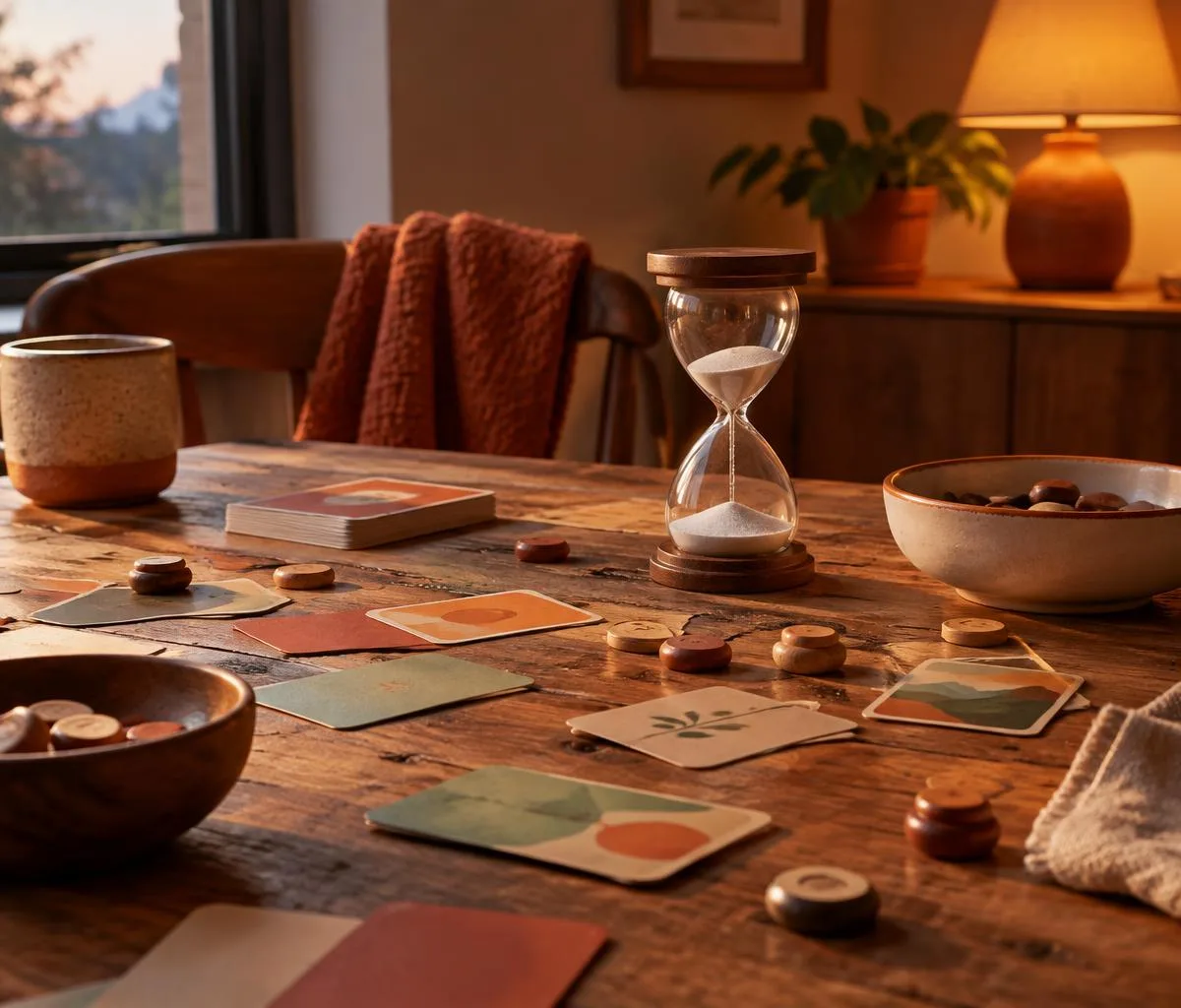
- Use games where small groups guess funny trivia about each other instead of solo performances.
- Keep rule explanations under sixty seconds to prevent party momentum from stalling.
- Offer low-pressure roles for introverted guests so everyone feels included.
Most of us have stood in a living room holding a lukewarm drink while trying to start a conversation with someone we barely know. It feels stiff, and forced mingling often leaves quiet guests clinging to the kitchen counter. When you host, you want your home to feel inviting from the moment people walk through the front door, without putting anyone on the spot or turning your parlor into a corporate workshop.
Good icebreakers do not require expensive board games or complicated apps that take twenty minutes to explain. We find that the best tools are usually already sitting in your junk drawer: an old deck of index cards, a few pencils, and some masking tape. With just a handful of straightforward activities, you can break the ice quickly, get folks laughing together, and keep the energy light all evening.
Setting the Ground Rules for Warm Group Games
Before you introduce any activity, the room needs a sense of psychological safety. People dread group games when they worry about looking foolish or being forced to reveal personal secrets. As the host, you can take all that pressure away within sixty seconds simply by explaining how participation works in your home.
We always make the opt-out rule clear before passing out supplies. Tell your guests that anyone is welcome to sit out, act as scorekeeper, or just hold the timer. Oddly enough, when you give people permission to sit back with their tea or cider, almost all of them decide to join in anyway. Freedom from pressure makes curiosity take over.
Here are the baseline habits we use to set a friendly atmosphere from the start:
- Keep explanations under two minutes: If an activity takes longer to explain than it does to play one round, save it for a dedicated board game night.
- Play in pairs first: Partnering someone with a person they already know gives them an anchor before mixing them into larger teams.
- Ban performance trivia: Avoid games that test niche academic facts, because they tend to divide the room into experts and bystanders.
- Model gentle self-deprecation: Go first, miss a prompt, or make a funny mistake so everyone sees the stakes are completely flat.
The Index Card Guessing Game That Never Fails
This is a gentle cousin of classic parlor games, and it costs less than three dollars for a pack of plain white cards. Each guest receives three blank index cards and a pencil upon arrival. You ask them to write down one distinct, true fact about their everyday life that people in the room might not know. The prompt should stay grounded in small oddities rather than big resume accomplishments.
Good prompts include: a bizarre food combination you secretly love, the oddest job you worked during your school days, or a harmless superstition you still follow. Collect the cards into a wooden bowl, stir them up, and read them aloud one by one between bites of dessert or during a natural lull in the chatter.
To run this smoothly, follow this simple sequence:
- Hand out supplies during entry: Give guests their cards while taking their coats so they have ten or fifteen minutes to think without feeling rushed.
- Review cards privately: Take sixty seconds in the kitchen to glance over the slips. If someone accidentally wrote something overly intense or sensitive, quietly put it aside.
- Read the clue aloud twice: Keep your voice clear and neutral so you do not give away the author by giggling too early.
- Open the floor for two quick guesses: Let the room call out ideas for thirty seconds. If no one nails it, have the author reveal themselves and share a two-sentence back-story.
Because the topics are quirky rather than competitive, this game shifts the conversation directly toward real storytelling. You will find folks chatting about odd college jobs long after the cards are put away.
Quick Movement Challenges for Small Living Rooms
Sitting in one spot for more than an hour can make any party feel slow. A brief physical challenge breaks that stiffness, but in a small living room with coffee tables and rugs, you must keep things safe and tidy. You do not need wide open spaces to get people moving their hands and laughing.
Our favorite challenges rely on balance, quiet coordination, and common household items. They take three minutes per round, accommodate people wearing regular party clothes, and never risk anyone tumbling into a bookshelf.
| Game Name | Supplies Needed | Space Required | Physical Demand |
|---|---|---|---|
| The Wooden Spoon Relay | 4 wooden spoons, 2 small apples | A 6-foot walking path | Low: slow heel-to-toe walking |
| Tower of Coasters | 20 cardboard or cork drink coasters | One flat coffee table | Very low: steady hands and balance |
| Blindfold Cotton Scoop | 2 shallow bowls, 1 bag cotton balls, 1 metal spoon | One standard dining chair | Low: upper body movement while seated |
| Balloon Knee Pass | 2 inflated balloons | A circle of 6 to 8 chairs | Moderate: seated leg lifts and coordination |
Take the Cotton Ball Scoop as a prime example. Seat a guest in a chair, tie a soft kitchen towel gently over their eyes, place a bowl of cotton balls in their lap, and hand them a large soup spoon. Place an empty bowl on top of their head. Give them forty-five seconds to scoop cotton balls from their lap into the bowl above. Because cotton balls have zero weight, the player cannot tell if their spoon is overflowing or completely empty. The sound of the room giggling provides their only clue.
If any guest has mobility limitations or back strain, substitute hand-based tasks like coaster stacking. Never push a physical stunt on someone who would rather simply watch the spectacle from an armchair.
Adapting Party Prompts for Mixed Age Groups
Family holiday parties and neighborhood block nights often put eight-year-olds on the couch next to seventy-year-olds. That age spread can kill standard party trivia, because shared pop-culture references evaporate across four decades. You need prompts based on sensory memory, simple observations, and universal human habits.
Instead of asking about famous movies or historic dates, build your questions around daily life that everyone understands. When you pick the right baseline, a third grader has just as much chance to answer cleverly as their retired grandparent.
Here are three prompt structures that bridge generations without talking down to anyone:
- The Smell and Taste Memory: Ask players to name the one school lunch item they despised most, or the smell that instantly reminds them of autumn. Children love complaining about cafeteria pizza, and older adults readily describe mid-century canned vegetables.
- Two Truths and a Wish: A gentle variation of the standard game. Each player shares two things they actually did this past week and one modest thing they wish they had done, like sleeping until ten in the morning or eating pancakes for dinner. Guessing the wish is surprisingly tricky across age lines.
- The Household Artifact: Bring out a single odd kitchen utensil, such as an old cherry pitter or an antique pastry wheel. Let the kids invent fantastic imaginary uses for it while older guests try to recall what their mothers called it.
When running mixed-age games, place folks in pairs combining one younger person and one older person. This prevents teenagers from clustering on their phones and gives younger children a supportive partner who can handle the handwriting for them.
Graceful Ways to End a Round While Fun Is High
The single biggest mistake in home entertaining is letting a good game run until people get tired of it. When a host says, "Let's do ten more cards!" after everyone just had a massive belly laugh, the energy slowly drains out of the room. By the time the game finishes, guests feel worn down rather than energized.
Your goal is to pack the supplies away while people are still clamoring for another turn. Leaving them wanting just a little more creates momentum that carries straight into dinnertime or general conversation around the fire.
We like to announce the final round in advance so nobody feels cut off abruptly. A cheerful, clear phrase works best: "We have time for two more cards before we bring out the warm cider." This frames the end of the activity not as an interruption, but as an exciting bridge to the next part of the gathering.
As soon as that final card is guessed, immediately transition the physical room. Pick up the pencils, set the bowl on a side table, and open the kitchen door or put on a gentle background record. Moving your body and changing the lighting or music signals to the group that the structured portion is done and they can now talk freely about what just happened.
Common Mistakes to Avoid
Even simple parlor games can run off the rails if you overlook basic social comfort. Watch out for these three frequent errors when hosting friends and neighbors:
- Putting individual introverts on the hot seat: Never make one person stand in the middle of the room alone while twenty people stare at them. Keep people seated comfortably in their chairs, or run activities in small clusters of four.
- Relying on competitive prizes: Giving away high-value gift cards turns a cozy social game into a contest where people argue over petty rules. Use small, silly prizes instead, like a funny trophy from a thrift store, a single chocolate bar, or simply the honor of choosing the next music album.
- Over-complicating scoring: If you need a spreadsheet or complex subtraction to determine who won, ditch the score altogether. The game is just an excuse to connect, not a tournament.
Practical Steps for Your Next Gathering
Hosting a relaxed, cheerful evening does not require hours of rehearsal. Before your guests arrive for your next get-together, take ten minutes to walk through your space and prep your tools so you never feel stressed during the party.
First, grab a pack of three-by-five index cards and sharpen half a dozen short pencils. Place them in a shallow basket right next to where people set down their keys and coats. Clear your coffee table of fragile knick-knacks and hot mugs so you have a solid three-foot square of open space ready for an impromptu challenge.
Pick just one or two activities from this guide rather than trying to fit five different things into a single evening. Introduce the first one about forty minutes after your start time, right when early arrivals have settled in and latecomers have taken their coats off. Once you see the room loosen up and chatter start flowing on its own, step back, pour yourself a drink, and enjoy the company you brought together.
Our ideas are for harmless entertainment only; always respect personal boundaries, local laws, and workplace safety rules before staging any joke. Disclaimer