You will explore how to shoot and cut simple family-friendly humor skits on your smartphone without fancy studio equipment. You will be able to share warm laughs with your online circle while keeping your production stress low.
- A clear visual premise within the first three seconds keeps viewers engaged naturally.
- Natural room acoustics and simple daylight make amateur skits look intentional and charming.
- Getting full consent from everyone on camera ensures your channel builds a loyal audience.
We have all had those moments at the kitchen counter where a simple task goes completely sideways. You reach for the coffee canister, knock over the spoon rest, and find yourself staring down a small mess while the kettle whistles like a train. In our little corner of the internet, we believe those clumsy, honest seconds are the exact raw material that makes people laugh. Great comedy clips do not need rented cameras or writers' rooms. They need an eye for the odd things we all do when we think nobody is looking.
Making short comedy videos is a lot like baking a good loaf of bread. You need a few reliable ingredients, some patience with the timing, and a willingness to clean up when the dough spills over the bowl. If you have a phone in your pocket and twenty minutes before dinner, you have enough to get started. In this guide, we walk through how we spot small jokes in daily chores, frame them up with honest daylight, cut them tight, and share them without pestering your friends.
Finding Everyday Absurdity in Household Routines
The easiest mistake when starting out is trying to invent a wild premise out of thin air. Real life is already strange enough if you slow down and watch it. Think about the silent negotiations between two people trying to unload a dishwasher at the same time, or the ritual of checking the refrigerator four times in an hour hoping new food has magically appeared. These small habits carry instant recognition. When a viewer recognizes their own quirks on screen, the laugh arrives naturally.
To capture these moments before they vanish, keep a tiny pocket notebook or an unformatted note file on your phone. Write down the minor irritations of your day with exact nouns. Instead of writing "laundry is annoying," write down "staring at seven unmatched black socks for four minutes." Specific details give your video texture. When you act out a scene later, using an actual plastic cereal container that always jams in the cupboard will ring truer than a generic prop.
Here are four dependable places where everyday absurdity tends to hide:
- The morning routine: The fog before caffeine, hunting for keys that are resting in your hand, or arguing with an automated voice assistant that mishears your timer request.
- Pet negotiations: Waiting by the back door while a dog inspects one leaf for three minutes in the rain, or a cat knocking over a plastic cup while maintaining direct eye contact.
- Grocery unpacking: The puzzle of trying to fit a melon into an overfilled vegetable crisper, or realizing you bought a third jar of mustard because you forgot to check the pantry shelf.
- Assembly tasks: Putting together flat-pack furniture with a single hex wrench while trying to decipher diagrams that look like abstract line drawings.
When you sit down to turn an observation into a script, keep the dialogue brief. A short sketch works best when the action carries the weight. If a character can say an entire sentence with a slow turn of the head or a weary sigh, cut the spoken words. Give the audience room to notice the background detail, like a pile of unwashed pans or a slippers-and-coat outfit that reveals how cold the morning really is.
Lighting and Framing Comedy Clips with Window Light
You do not need to spend hard-earned cash on studio light rings or LED panels. Some of the most charming comedy clips online use simple north-facing daylight. Natural light gives skin tones a soft, friendly look that feels domestic and believable. When a scene looks too polished, it can feel like a television commercial, which puts people on guard. Soft daylight tells the viewer that this is an honest moment in a normal home.
Set your camera or phone roughly four to six feet away from an open window. Position yourself so the light hits your face at about a forty-five-degree angle rather than straight on. Direct front light washes away your nose and cheekbones, which hides the subtle eyebrow twitches and lip curls that make visual comedy work. If the sun is beaming straight into the glass and creating harsh, squinting shadows, tape a thin white bedsheet or a sheet of tracing paper across the pane. That single sheet turns harsh sunlight into a warm, gentle glow.
| Position | Distance from Window | Comic Effect |
|---|---|---|
| Side angle (45 degrees) | 4 to 5 feet | Shows deep brow lines, smirks, and eye rolls clearly. |
| Diffused front | 6 feet with thin curtain | Clean, bright look for quick conversational gags. |
| Backlit silhouette | Subject between window and lens | Great for dramatic mock-heroic stances or fake seriousness. |
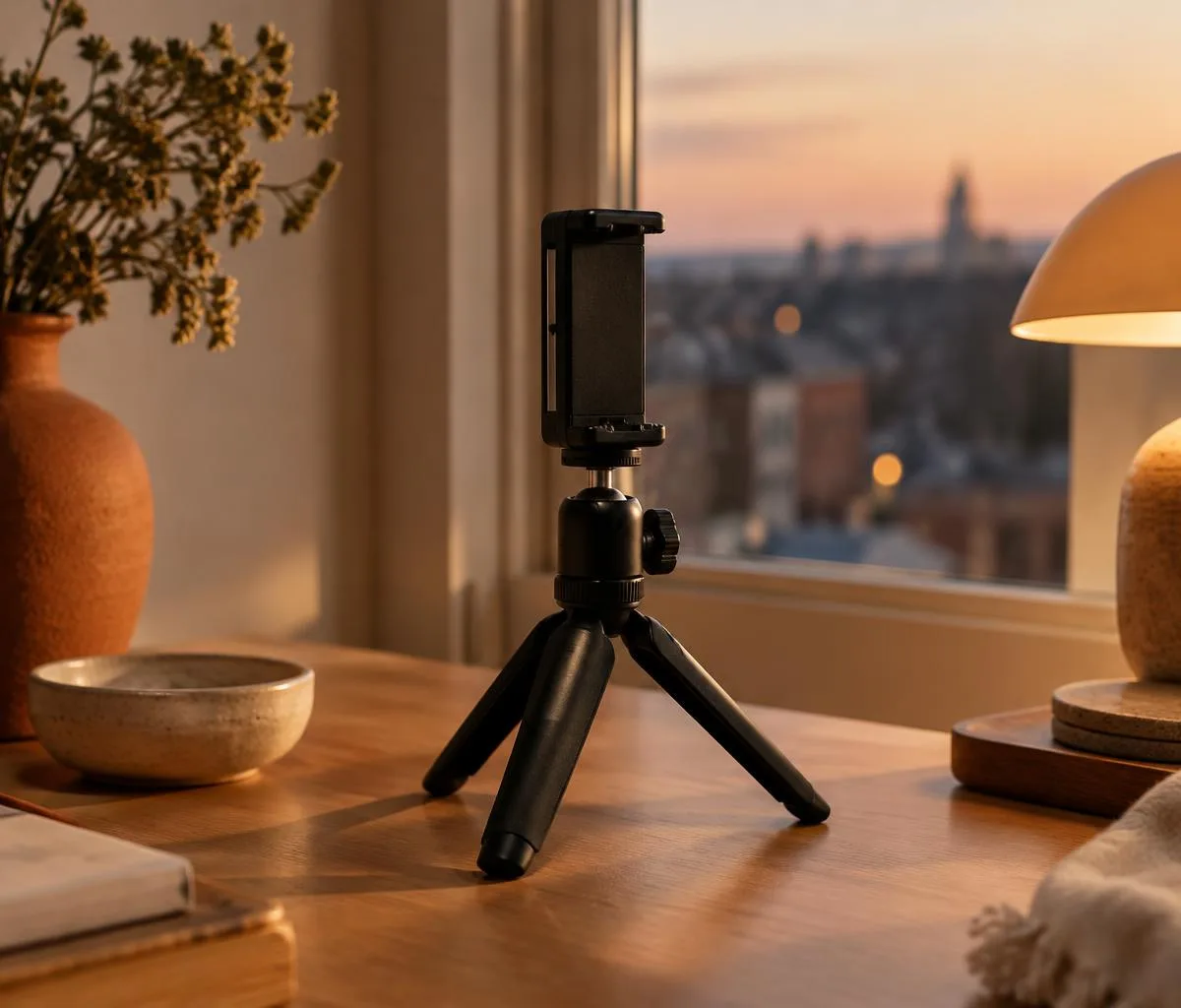
Frame your shot with intent. Comedy requires that viewers see both the action and the reaction in the same mental breath. For solo routines, a medium shot from the waist up works well because it captures your hand gestures alongside your facial expression. Keep your phone at eye level. If you place the camera on a counter looking up, your chin dominates the screen and distracts from your eyes. We use a heavy coffee mug stuffed with a clean hand towel to prop up a phone securely when we do not want to drag out a tripod.
Leave a little head room above your hair, but do not waste half the vertical frame on the ceiling. If you are filming a vertical clip for mobile phones, make sure your body takes up about two thirds of the frame height. Check your background for clutter that distracts rather than adds to the joke. A messy sink tells a story, but an open bathroom door with a towel on the floor just looks like careless filming. Tidy up the two feet directly behind your head so your face remains the focal point.
The Three-Beat Edit: Setup, Anticipation, and Punchline
Editing comedy is about rhythm and breathing. You can write a delightful concept, but if the cut lands three frames too late, the humor leaks out like air from an old bicycle tire. We rely on the traditional three-beat edit: establish the expectation, hold the pause, and deliver the surprise. In short-form video, this entire sequence can happen within seven to twelve seconds.
Establishing the Norm
The first beat belongs to the setup. Within the first two seconds, the viewer must understand who you are, where you are, and what you are trying to do. If you are sweeping the floor, show the broom moving across the linoleum immediately. Do not add intro titles, waving hellos, or theme music. Drop the viewer straight into the task so their brain can settle into the rhythm of the chore.
Holding the Pause
The second beat is anticipation, often called the hold. This is where the tension builds. If a character hears a strange squeak from the dryer, hold on their frozen face for roughly eighteen to twenty-four frames, which is just under a full second. That brief silence creates anticipation. The viewer knows something is wrong, and their mind rushes forward to guess what happens next. If you cut away too fast, the audience never gets the chance to lean in.
Delivering the Snap
The third beat is the punchline. This can be a visual reveal, an unexpected sound, or a deadpan sentence. Deliver it abruptly. If a broom handle snaps, cut directly from the strained face to the broken handle without an intermediate transition. Cut the clip less than a second after the joke lands. Leaving dead air at the end of a video invites people to scroll away before the feeling of the laugh has settled in.
- Trim the front edges: Remove the second where your hand reaches toward the screen to hit record. Start on motion.
- Match the audio cuts to speech: Cut out breath sounds between sentences unless a heavy sigh is part of the performance.
- Adjust for pacing: If a joke feels sluggish, trim five frames from the middle of the reaction shot. A frame trim of just a fraction of a second changes the energy completely.
- End on the highest point: Cut the video while the viewer is still smiling, not when your face returns to neutral.
Why Getting Clear Consent Protects Your Creator Journey
It is tempting to capture friends, family members, or shop clerks off guard because spontaneous reactions look genuine. However, filming people without their knowledge can damage trust quickly, and it can land your account in hot water. A short comedy clip should never come at the expense of someone's dignity or privacy. Before you point a lens at your spouse, your children, or a coworker, have an open conversation about what you are making.
Show them the idea beforehand. You can say something straightforward: "I am filming a thirty-second clip about how we always lose the car keys. Would you be comfortable acting out this one line?" When people know what to expect, they relax. An actor who feels safe will give you a far funnier performance than someone who feels ambushed by a camera pushed into their face over breakfast.
Keep these practical boundaries in mind as you plan your shoots:
- Private spaces: Never film in bedrooms, bathrooms, or changing areas, even for a harmless background gag. Keep your scenes to communal rooms like kitchens, living rooms, or garden paths.
- Children and minors: Be cautious about featuring young family members. Digital footprints last a long time, and a toddler's tantrum might seem funny today but uncomfortable for them years later. When in doubt, leave them off camera.
- Strangers in public: If you film on a sidewalk or in a park, check local laws regarding public photography in your jurisdiction. While casual filming is often permitted, commercial use or close-up features of identifiable individuals may require signed release forms. If you plan to monetize clips or work with sponsors, speaking with an entertainment attorney or legal professional in your area is the safest path.
- Revoking permission: If a friend agrees on Tuesday but feels self-conscious on Thursday, take the video down without arguing. Relationships in your real life matter far more than a spike in video metrics.
Clear communication builds a small team around you. When your friends realize you will never make them look foolish or post unflattering footage without their blessing, they will happily volunteer to hold the camera, read a line, or lend you a prop for your next sketch.
Sharing Humorous Clips Without Spamming Your Friends
Once you finish an edit you are proud of, the natural urge is to send it to everyone in your phone contacts. We suggest resisting that impulse. Group chats and family text threads are meant for personal check-ins, dinners, and updates. Dumping your creative projects into those spaces can make loved ones feel pressured to offer polite applause, which quickly leads to quiet resentment.
Instead, let your clips find an audience that chooses to be there. Post them directly to your public channel or account, using accurate, simple descriptions. Write a caption that extends the joke rather than begging for attention. Instead of writing "Please like and share this took 5 hours!", write something plain like "Day four of trying to fold a fitted sheet without crying." A modest caption lets the video speak for itself and respects the viewer's intelligence.
If you do want to share a clip with a close friend, pick someone who specifically enjoys that style of humor, and send it with a personal note. You might say, "This reminded me of our flat in college when the radiator rattled all night." That turns the link into a personal conversation rather than a broadcast announcement. One genuine connection with a friend who appreciates the memory is worth far more than fifty polite thumbs-up emojis in a family group chat.
Pay attention to the comments you receive from people you do not know. Reply to early viewers like a shopkeeper greeting folks at the door. A warm, simple "Thank you, glad you enjoyed it!" helps build a community of regular visitors. You do not need to post five times a day. Two well-crafted, honest clips per week are plenty to build an audience that looks forward to your next upload.
Common Mistakes to Avoid
Even seasoned creators slip up when rushing to put an idea onto the screen. Here are a few frequent missteps that weaken an otherwise solid sketch:
- Overloading the audio track: Layering loud cartoon sound effects over every single movement distracts from the visual humor. Trust your natural Foley sounds, such as the clink of a fork or the creak of a floorboard.
- Laughing at your own jokes on camera: Unless breaking character is the specific premise, try to maintain a straight face. The contrast between your serious expression and the silly situation is where the comedy lives.
- Ignoring the microphone position: Standing twelve feet away from your phone while running water creates an echoey roar that obscures your speech. Keep the camera close, or invest in a small wired lapel microphone that pins to your collar.
- Dragging out the ending: Lingering after the joke has landed to ask people to follow your page takes the air out of the room. Let the punchline be the final memory.
Practical Next Steps for This Weekend
You do not need to wait for ideal conditions or a burst of genius to make your first clip. Pick one small annoyance that happened to you this past week. It might be hunting for an elusive tape measure, struggling to open a plastic produce bag with dry fingers, or trying to read the tiny instructions on a bottle of cough syrup.
Write down three sentences: the chore you are doing, the tiny mistake that occurs, and your honest reaction. Tomorrow morning, set your phone on the kitchen counter near a sunny window, prop it against a coffee mug, and record yourself acting out those three beats. Keep the whole take under fifteen seconds. Cut off the rough edges using a free editing app on your phone, trim the pause until the timing feels crisp, and save the file.
Do not worry about whether it goes viral. The goal of your first attempt is simply to capture an honest slice of life that brings a quick smile. Once you see how much fun it is to turn daily chores into lighthearted moments, you will never look at an empty milk carton or a tangled ball of twine the same way again.
Our ideas are for harmless entertainment only; always respect personal boundaries, local laws, and workplace safety rules before staging any joke. Disclaimer